
Traductions de rock songs + histoire, contexte, vidéos et reprises. Songs translations + covers. All in English/French!
/image%2F2475403%2F20200930%2Fob_0989f9_silly-walks-large.JPG)
18 Novembre 2017
Aucune autre chanson dans l’histoire du rock a allié autant d’ambition, de mystère et d’audace pure que Bohemian Rhapsody. Lorsque Queen la sort en octobre 1975 comme premier single de A Night at the Opera, le groupe ne se contente pas de défier les conventions : il les réécrit entièrement.
/image%2F2475403%2F20251116%2Fob_03926f_queen-bohemian-rhapsody-rocktranslatio.jpg)
1* Traduction en français
2* Commentaire en français
3* Comment in English
4* Original song text
5* The Queen versions
6* Reprises / Covers
1* Traduction en français
Queen - Rhapsodie Bohémienne
Est-ce cela la vraie vie ?
N'est-ce qu'un fantasme ?
Happé par un glissement de terrain
On ne peut échapper à la réalité
Vois les choses en face
Regardes vers les cieux et vois
Je ne suis qu'un pauvre garçon
Je n'ai besoin d'aucune pitié
Car je suis facile, sitôt gagné, sitôt perdu
Un peu high, un peu déprimé
D'où vient le vent m'importe peu
Maman, je viens de tuer un homme
J'ai pointé un pistolet contre sa tête
Ai appuyé sur la détente, le voilà mort
Maman, la vie venait juste de commencer
Mais là j'ai vrillé et tout foutu en l'air
Maman, je ne voulais pas te faire pleurer
Si je ne suis pas rentré à cette heure demain
Continue, continue comme si rien n'importe vraiment
C'est trop tard, mon heure est venue
Des frissons me parcourent le dos
Mon corps est tout le temps douloureux
Mon corps me fait tout le temps soufrir
Adieu vous tous, je dois y aller
Je dois tous vous laisser et faire face à la réalité
Maman oooh (d'où que vienne le vent)
Je ne veux pas mourir,
J'aurais parfois voulu n'être jamais né
Je vois une petite silhouette d'homme,
Scaramouche, Scaramouche
Danseras-tu le fandango ?
Foudre et éclairs me font très très peur
Galiléo, Galiléo, Galiléo, Galiléo,
Galiléo Figaro Magnifico
Je ne suis qu'un pauvre garçon, personne ne m'aime
Il n'est qu'un pauvre garçon, d'une pauvre famille
Épargnez sa vie de cette monstruosité
Sitôt gagné, sitôt perdu, me libèrerez-vous ?
Au nom de dieu ! Non, nous ne te libèrerons pas (libérez-le !)
Au nom de dieu ! Nous ne te libèrerons pas (libérez-le !)
Au nom de dieu ! Nous ne te libèrerons pas (libérez-moi !)
Ne te libèrerons pas (libérez-moi !)
Jamais jamais jamais jamais ne me libérerez
Mama mia, mama mia, mama mia libérez-moi
Belzébuth m'a réservé un diable, pour moi, pour moi
Alors tu crois pouvoir me lapider et me cracher au visage ?
Alors tu crois pouvoir m'aimer et me laisser mourir ?
Oh baby, tu ne peux pas me faire ça baby
Je dois juste m'enfuir, je dois juste m'enfuir tout de suite d'ici
Rien n'est vraiment important,
Quiconque peut le voir,
Rien n'est vraiment important
Rien ne m'importe vraiment
D'où que vienne le vent.
2* Commentaire en français
Peu de chansons dans l’histoire du rock allient autant d’ambition, de mystère et d’audace pure que Bohemian Rhapsody. Lorsque Queen la sort en octobre 1975 comme premier single de A Night at the Opera, le groupe ne se contente pas de défier les conventions : il les réécrit entièrement. Freddie Mercury conçoit la pièce comme une mini‑opéra, un univers autonome où ballade, opéra et hard rock se heurtent… et fusionnent miraculeusement en parfaite, impossible harmonie. Cela a été délibéré.
Mercury présente la chanson à ses partenaires par fragments : ici une ballade au piano, là une section d’opéra, puis une explosion rock. « C’est trois chansons en une », se souvient Brian May, bien qu’il n’imaginât pas comment ce puzzle insensé tiendrait ensemble. Le titre, lui, annonce déjà la couleur : « Bohemian » évoque la liberté artistique et l’anticonformisme ; « Rhapsody », la tradition classique des pièces composées au fil de l’émotion plutôt que de la structure.
/image%2F2475403%2F20251116%2Fob_e88b8a_queen-bohemian-rhapsody-rocktranslatio.jpg)
Le titre s'inspire de la suite de 19 pièces qu'avait composé Franz Liszt : les Rhapsodies Hongroises.
Suicide commercial. L’industrie musicale est stupéfaite : un single de six minutes, sans refrain, sans couplets répétés, avec galimatia d'italien d’opéra ? Pour EMI, c’est du suicide commercial. Les programmateurs radio refusent – les hits de l’époque durent trois minutes, quatre au maximum. Mercury tient tête avec panache : la chanson sortira intacte ou ne sortira pas. Sa confiance, à la fois artistique et intime, a la même source que sa présence scénique : vulnérabilité, grandeur et intransigeance absolue.
Pousser la technologie à la rupture. L’enregistrement, entre Rockfield et Roundhouse Studios, devient un Everest technique. La seule section opératique mobilise des semaines de superpositions vocales : Mercury, May et Roger Taylor enregistrent près de 180 pistes, réduites et réassemblées jusqu’à user l’oxyde de la bande. L’ingénieur Roy Thomas Baker dira plus tard qu’un ou deux overdubs de plus auraient désintégré la bande magnétique.
Les paroles absurdes de la partie opératique – Scaramouche, Fandango, Galileo, Bismillah, Beelzebub – sont délivrées avec un sérieux théâtral. L’humour nourrit le drame, et le drame contient l’humour : un mélange de vaudeville, de grand opéra et de crise existentielle… qui fonctionne.
/image%2F2475403%2F20251116%2Fob_6a1c68_queen-bohemian-rhapsody-rocktranslatio.jpg)
Le mystère du sens. Mercury refusera toujours d’en donner une explication : « C’est une chanson au parfum de fantasme », dit‑il. « Les gens devraient simplement l’écouter, y réfléchir, et décider eux‑mêmes de ce qu’elle signifie. »
Pourtant, le poids émotionnel est évident : la confession « Mama, just killed a man », le procès intérieur de la partie opératique, la catharsis hard‑rock, puis la résignation mélancolique de Nothing really matters. Beaucoup y voient une métaphore du coming‑out de Mercury, une confession codée sur l’identité et l’acceptation de soi. D’autres invoquent Camus ou le mythe de Faust, mais la lecture intime semble plus convaincante. S’il s’agit bien d’un aveu déguisé, il est compréhensible que Mercury reste discret : ses parents, très religieux et proches de lui, ignoraient son homosexualité.
Peter Freestone, l'assistant personnel de Freddie Mercury pendant douze ans, confirmera plus tard une origine plus terre à terre : « C’était en fait trois chansons distinctes qui tournaient dans sa tête, mais qu’il n’arrivait pas à terminer. Finalement, ils ont tout assemblé. C’était un coup de génie. »
Cette genèse hybride, loin d’en diminuer la valeur, renforce la prouesse : un collage improbable devenu œuvre cohérente et inévitable.
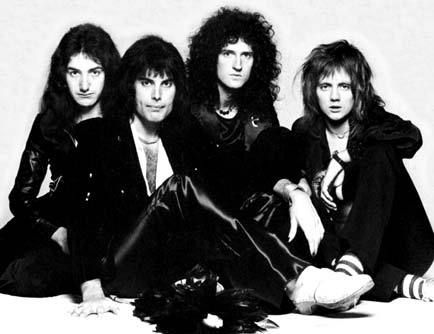
L’invention du clip moderne. Pour éviter de rejouer la chanson en playback à Top of the Pops, Queen tourne un film promotionnel – l’un des premiers véritables clips conceptuels. Réalisé par Bruce Gowers en quatre heures pour 4 500 £, il grave à jamais l’image des quatre visages en losange sous un éclairage dramatique. Cinq ans avant MTV, Queen en invente la grammaire visuelle.
/image%2F2475403%2F20251116%2Fob_1d3b80_queen-bohemian-rhapsody-rocktranslatio.jpg)
Contre toute attente, un triomphe. Malgré le scepticisme des radios, le morceau devient un phénomène. Il occupe la première place du classement britannique pendant neuf semaines, se vend à plus d’un million d’exemplaires et décroche le N° 1 de Noël 1975. Lorsque Mercury meurt en novembre 1991, la chanson revient au sommet pour cinq autres semaines : un véritable requiem national. Elle devient le troisième single le plus vendu de l’histoire du Royaume‑Uni.
Une nouvelle génération la redécouvre en 1992 grâce à Wayne’s World et la célèbre scène de headbanging en voiture, preuve qu’une œuvre aussi baroque peut être à la fois monument culturel et moment de joyeuse irrévérence. Le titre atteint alors la deuxième place du Billboard Hot 100, mieux que sa neuvième place originale de 1976.
/image%2F2475403%2F20251116%2Fob_391687_queen-bohemian-rhapsody-rocktranslatio.jpg)
L’héritage. A Night at the Opera devient l’album le plus coûteux de son époque, environ 40 000 £ (près de 300 000 £ actuelles). Bohemian Rhapsody en est le cœur impossible : « le projet le plus élaboré auquel j’aie jamais participé », dira Roy Thomas Baker.
Avec plus de 1,6 milliard d’écoutes sur Spotify et son entrée au Grammy Hall of Fame, Bohemian Rhapsody dépasse le statut de chef‑d’œuvre de Queen : c’est un monument au courage artistique, la preuve qu’une vision déraisonnable peut triompher de toutes les règles.
Et, cinquante ans plus tard, son plus grand exploit demeure intact : on ne sait toujours pas vraiment ce qu’elle veut dire — mais on ressent, à chaque seconde, toute sa folie, sa tendresse et sa démesure.
Quelques notes de traduction. Fantasme n'a pas qu'un seul sens, celui qu'on lui colle maintenant... J'ai laissé les noms propres italiens en italien, et ai traduit l'arabe bismillah (au nom de dieu), car ce n'est pas un nom propre.
/image%2F2475403%2F20251115%2Fob_8fdbea_queen-bohemian-rhapsody-rocktranslatio.jpg)
Ne manquez pas la reprise faite en 2025 à Paris en flashmob, tout à la fin ↓↓↓↓
3* Comment in English
Bohemian Rhapsody: The Six-Minute Gamble That Changed Rock Forever. Few songs in rock history carry the same mixture of ambition, mystery, and sheer audacity as "Bohemian Rhapsody." When Queen released it in October 1975 as the lead single from A Night at the Opera, they weren't just defying convention—they were rewriting it entirely. Freddie Mercury had conceived the piece as a miniature opera, a self-contained universe where ballad, opera, and hard rock collided and somehow emerged in perfect, impossible harmony.
Mercury introduced the song to his bandmates in fragments: a piano ballad here, an operatic middle section there, a hard-rock explosion at the end. "It's three songs in one," Brian May recalled, though even he couldn't predict how this audacious puzzle would ultimately cohere. The title itself carried weight—"Bohemian" suggesting artistic freedom and unconventionality, "Rhapsody" evoking the classical music tradition of episodic, through-composed works that follow emotion rather than structure.
The title was inspired by the series of 19 pieces composed by Franz Liszt: the Hungarian Rhapsodies.
Commercial Suicide. The music industry was apoplectic. A six-minute single with no chorus, no repeated verses, and mock-Italian operatic gibberish? EMI executives deemed it commercial suicide and pushed hard for edits. Radio programmers balked—the standard pop single ran three minutes, maybe three-and-a-half at most. But Mercury held firm with theatrical defiance: the song would be released intact, or not at all. His confidence was both artistic and personal, rooted in the same place as his stage presence—vulnerable, grandiose, utterly uncompromising.
Pushing Technology to the Breaking Point. Recording "Bohemian Rhapsody" at Rockfield Studios and Roundhouse Studios became a technical Everest. The operatic section alone required weeks of vocal overdubbing, with Mercury, May, and Roger Taylor building massive choir parts layer by meticulous layer. They recorded approximately 180 separate vocal tracks, bouncing them down repeatedly on 24-track tape. Engineer Roy Thomas Baker later revealed that the oxide was literally wearing off the tape from overuse—one or two more overdubs and it might have disintegrated entirely.
The operatic segment's absurdist lyrics—"Scaramouche," "Fandango," "Galileo," "Bismillah," "Beelzebub"—were delivered with complete dramatic commitment. The humor was intrinsic to the drama, the drama inseparable from the humor. It was vaudeville meets grand opera meets psychological breakdown, and somehow it worked.
/image%2F2475403%2F20251116%2Fob_8ae290_queen-bohemian-rhapsody-rocktranslatio.jpg)
The Meaning Behind the Mystery. Mercury famously refused to explain the lyrics, insisting that interpretation belonged to the listener. "It's one of those songs which has such a fantasy feel about it," he said. "I think people should just listen to it, think about it, and then make up their own minds as to what it means."
Yet the song unmistakably carries emotional weight—the haunting confession "Mama, just killed a man," the operatic trial scene suggesting a mind at war with itself, the hard-rock catharsis, and finally the resigned "Nothing really matters" that closes with bittersweet acceptance. Many have interpreted it as a metaphor for Mercury's coming out, a coded confession about identity and self-acceptance. Other theories—that it was inspired by Camus's The Stranger or the Faustian myth—seem less convincing given the song's intensely personal emotional landscape. Still, Mercury maintained his position: "'Bohemian Rhapsody' does not come from nowhere," he acknowledged, but its true meaning would remain his secret.
What's plain is that if, as likely it is, it is a disguised coming out, It is quite understandable that Mercury would not be explicit on it, as his parents, whom he was close to, were quite religious and unaware of his homosexuality.
Peter Freestone, Mercury's personal assistant for over twelve years, later revealed a fascinating detail about the song's genesis: it was actually a mash-up of separate tunes the band had struggled to complete individually. "It was basically three songs in one going around in Freddie's head, but he couldn't finish anything off," Freestone explained. "In the end, they sort of pitched it all together. It was a genius move from the band." This practical origin story doesn't diminish the song's artistry—if anything, it makes the achievement more remarkable. What could have been a Frankenstein's monster of incompatible parts became a seamless, inevitable whole.
Inventing the music video era. To avoid repeatedly miming the complex song on Top of the Pops, Queen created a promotional film—one of the first true concept music videos. Director Bruce Gowers shot it in just four hours for just £4,500. The stark lighting, dramatic poses, and iconic diamond formation of the four faces became instantly legendary, accidentally pioneering the visual language of MTV five years before the channel even existed.
Against All Odds, a triumph. Despite radio resistance, the song became an unstoppable phenomenon. It dominated the UK charts for nine weeks, selling over a million copies and becoming 1975's Christmas number one. When Mercury died in November 1991, it climbed the charts again, holding the top spot for five more weeks—a national requiem. The song became the UK's third best-selling single of all time.
A new generation discovered it in 1992 when Wayne's World featured the famous car-headbanging scene, proving that even the strangest piece of rock opera could be both cultural monument and moment of pure, joyful irreverence. The song reached number two on the US Billboard Hot 100—higher than its original 1976 peak of number nine.
The Legacy. A Night at the Opera became the most expensive album ever recorded at that time, reportedly costing around £40,000 (worth approximately £300,000 of 2025). "Bohemian Rhapsody" was its impossible centerpiece—producer Roy Thomas Baker called it "the most elaborate project" he'd ever worked on.
Today, with over 1.6 billion streams on Spotify alone and induction into the Grammy Hall of Fame, "Bohemian Rhapsody" stands as more than Queen's signature masterpiece. It's a monument to artistic courage—proof that boldness can triumph over reason, that the strangest instincts of a singular genius can reshape popular music itself.
And after five decades, the song's greatest achievement remains beautifully intact: we still don't fully know what it means, but we feel every transcendent, ridiculous, heartbreaking second of it.
4* Original song text
Queen - Bohemian Rhapsody
Is this the real life?
Is this just fantasy?
Caught in a landslide,
No escape from reality.
Open your eyes,
Look up to the skies and see,
I'm just a poor boy, I need no sympathy,
Because I'm easy come, easy go,
Little high, little low,
Any way the wind blows doesn't really matter to me, to me.
Mama, just killed a man,
Put a gun against his head,
Pulled my trigger, now he's dead.
Mama, life had just begun,
But now I've gone and thrown it all away.
Mama, ooh,
Didn't mean to make you cry,
If I'm not back again this time tomorrow,
Carry on, carry on as if nothing really matters.
Too late, my time has come,
Sends shivers down my spine,
Body's aching all the time.
Goodbye, everybody, I've got to go,
Gotta leave you all behind and face the truth.
Mama, ooh (any way the wind blows),
I don't wanna die,
I sometimes wish I'd never been born at all.
I see a little silhouetto of a man,
Scaramouche, Scaramouche
Will you do the Fandango?
Thunderbolt and lightning,
Very, very frightening me.
(Galileo) Galileo, (Galileo) Galileo,
Galileo Figaro Magnifico.
I'm just a poor boy, nobody loves me.
He's just a poor boy from a poor family,
Spare him his life from this monstrosity.
Easy come, easy go, will you let me go?
Bismillah! No, we will not let you go. (Let him go!)
Bismillah! We will not let you go. (Let him go!)
Bismillah! We will not let you go. (Let me go!)
Will not let you go. (Let me go!)
Never let you go (Never, never, never, never let me go)
Oh, mama mia, mama mia (Mama mia, let me go.)
Beelzebub has a devil put aside for me, for me, for me.
So you think you can stone me and spit in my eye?
So you think you can love me and leave me to die?
Oh, baby, can't do this to me, baby,
Just gotta get out, just gotta get right outta here.
Nothing really matters,
Anyone can see,
Nothing really matters,
Nothing really matters to me.
Any way the wind blows.
Mes autres traductions documentées de Queen :
http://www.rocktranslation.fr/tag/queen/
5* Queen versions
1975 official video clip :
live 1975 :
enchainé avec une autre
1981 live
1985 Live Aid:
6* Reprises / Covers
1977 London Symphony Orchestra :
1982 Royal Philarmonic Orchestra :
1992 Elton John, Axl Rose and Queen
2009 Queen + The Muppets
2011 William Shatner feat. John Wetton
2016 Panic! at the Disco
2017 Pentatonix
2021 Peter Bence
piano
2025 street flashmob
(Place de la Contrescarpe, Paris)
Sung by Mickey Callistono


/image%2F2475403%2F20260917%2Fob_105ca6_zc-ian-dury-my-old-man-face.jpg)
/image%2F2475403%2F20251129%2Fob_9bd547_blondie-heart-of-glass-rocktranslation.jpg)
/image%2F2475403%2F20251128%2Fob_93184c_sixto-rodriguez-a-most-disgusting-song.jpg)
/image%2F2475403%2F20251116%2Fob_864190_dusty-sprinfield-spooky-rocktranslatio.jpg)